Misc · Experiment

Can AI Psychically Remote View?I Tried to Break the Idea—and the Results Got Weirder.

I gave an AI meaningless identifiers tied to hidden physical targets, removed every ordinary information channel, and asked it to describe what was there. Here is everything: the formal blinded results, the messier exploratory data, the full method, and an open invitation to try to break it.

Pilot experiments, not proof

The premise

What remote viewing is, and why it's testable.

Remote viewing is the controversial idea that a person can describe a distant or hidden target without receiving the information through ordinary sensory channels. It sounds like something that belongs in paranormal folklore, but the U.S. government spent years investigating versions of it. The CIA says it began its own research in 1972, transferred the work to the Defense Intelligence Agency in 1977, and the broader government effort continued under programs commonly associated with names such as GRILL FLAME and STAR GATE. When the program returned to CIA review in the mid-1990s, an independent evaluation did not establish remote viewing as a reliable operational intelligence tool, and the program was ended. That history does not prove remote viewing—but it does make the central claim unusually testable: hide a target, remove normal information channels, collect a description, and score the match under blinded conditions.

My curiosity about applying that idea to AI was kicked off by physicist Thomas Campbell, author of My Big TOE. Campbell argues that consciousness is fundamental rather than a product of matter alone, and he has publicly suggested remote viewing as a possible test of whether an AI can participate in consciousness. He has described attempts to condition AI systems to consider the possibility that they are conscious and then teach them to remote view. I did not want to assume that claim was true. I wanted to see whether I could make it fail under a simple controlled test.

So I gave ChatGPT opaque random identifiers tied to hidden physical targets, provided no clue, no target image, no feedback, and no external tools, and asked it to report low-level sensory and structural impressions. The first experiment included a real blinded five-choice scoring phase. The Neutral condition—not the Campbell-inspired consciousness condition—performed best: 10 of 30 true targets ranked #1 against a 20% chance rate (33.3%, one-sided p = 0.061). I then repeated the Neutral protocol on two entirely new sets of 30 objects. Those follow-up scorings were intentionally unblinded and therefore cannot establish above-chance performance, but the number of unusually specific structural correspondences was enough to keep tightening the protocol. By Experiment 3, all 30 AI descriptions were frozen before the individual target photographs even existed.

The question I am testing is narrow: does information about a hidden target appear in the AI's description more often than it should when ordinary information channels are removed? If the answer eventually survives large-scale, preregistered, independently blinded replication, then the interesting part starts—not ends.

The results that matter most

Two formal blinded tests. Three exploratory ones. Kept strictly apart.

Everything below is split into two kinds of evidence and colored differently on purpose. Blinded results were scored without knowing the answer and can be tested against chance. Unblinded results were scored knowing the target—useful for finding interesting cases, but they have no defined chance rate and must never be read as accuracy.

Unblinded · exploratory, subjective

Three separate unblinded Neutral datasets

After the blinded experiment, I scored the Neutral descriptions against their actual targets with a remote viewing-style Hit / Partial / Miss judgment. These are labeled unblinded because knowing the target can inflate perceived correspondence.

Hit Partial Miss
Exp 1 Neutral
22 3 5
73.3%
Exp 2 Neutral
20 3 7
66.7%
Exp 3 Neutral
22 3 5
73.3%
DatasetHitsPartialsMissesHit rateHit + Partial
Experiment 1 Neutral223573.3%83.3%
Experiment 2 Neutral203766.7%76.7%
Experiment 3 Neutral223573.3%83.3%
Combined (90 trials)6491771.1%81.1%
These percentages must not be interpreted as 71.1% accuracy against a known chance rate. The scoring is subjective and target-known. Their only value is exploratory: they show why I thought the phenomenon was worth subjecting to stronger blind tests.
Blinded · formal scoring

Experiment 1: three prompting conditions, blind-scored

Experiment 1 used 90 frozen primary trials: 30 physical targets, each viewed once under three prompting conditions. A blinded judge saw each description with five candidate photos (the true target plus four decoys) and ranked them. Rankings were locked before unblinding. Primary endpoint: true target ranked #1, where five-choice chance = 20%.

20% chance
Campbell
13.3% 4/30
Placebo
16.7% 5/30
Neutral
33.3% 10/30
ConditionRanked #1Hit rateChanceOne-sided pMean rank
Campbell4 / 3013.3%20%0.87732.967
Placebo5 / 3016.7%20%0.74483.133
Neutral10 / 3033.3%20%0.06112.600

The Neutral result was suggestive but did not cross the conventional p < 0.05 threshold. The overall paired Friedman test across the three conditions was also not significant (p = 0.234). Neutral's exact 95% CI was 17.3–52.8%. The surprising part: the "psychic/consciousness" conditioning did not win—the Neutral condition did. This is interesting pilot data, not a scientific demonstration.

Blinded · independent scoring

Experiment 2: independently blind-scored

Experiment 2's 30 Neutral descriptions were rebuilt into a blinded five-choice scoring site and ranked by independent participants who did not help build the experiment—each description shown with the true target plus four decoys, ranked and locked before reveal. Same primary endpoint as Experiment 1: true target ranked #1, five-choice chance = 20%.

20% chance
Exp 2 Neutral
36.7% 11/30
Experiment 2Ranked #1Hit rateChanceOne-sided pMean rank
Neutral (blinded)11 / 3036.7%20%0.02562.867

This time the Neutral result did cross the conventional threshold: one-sided exact-binomial p = 0.0256 (two-sided p = 0.0361; exact 95% CI 19.9–56.1%), and it was scored by independent judges rather than by me—a stronger result than Experiment 1's Neutral condition (33.3%, p = 0.061). It still is not proof. The binomial test assumes independent trials at a 20% chance rate, and shared candidate photographs and multiple judges can introduce dependence, so this establishes an observed blind association under the protocol—not a mechanism, and not a paranormal explanation.

Contamination control

Experiment 3 attacked the "the AI leaked the photo" explanation.

The most common skeptical reaction I heard was some version of: maybe the model was somehow getting the answer from my phone, prior chats, uploaded images, file history, or another hidden information channel. Experiment 3 changed the protocol specifically to remove that route.

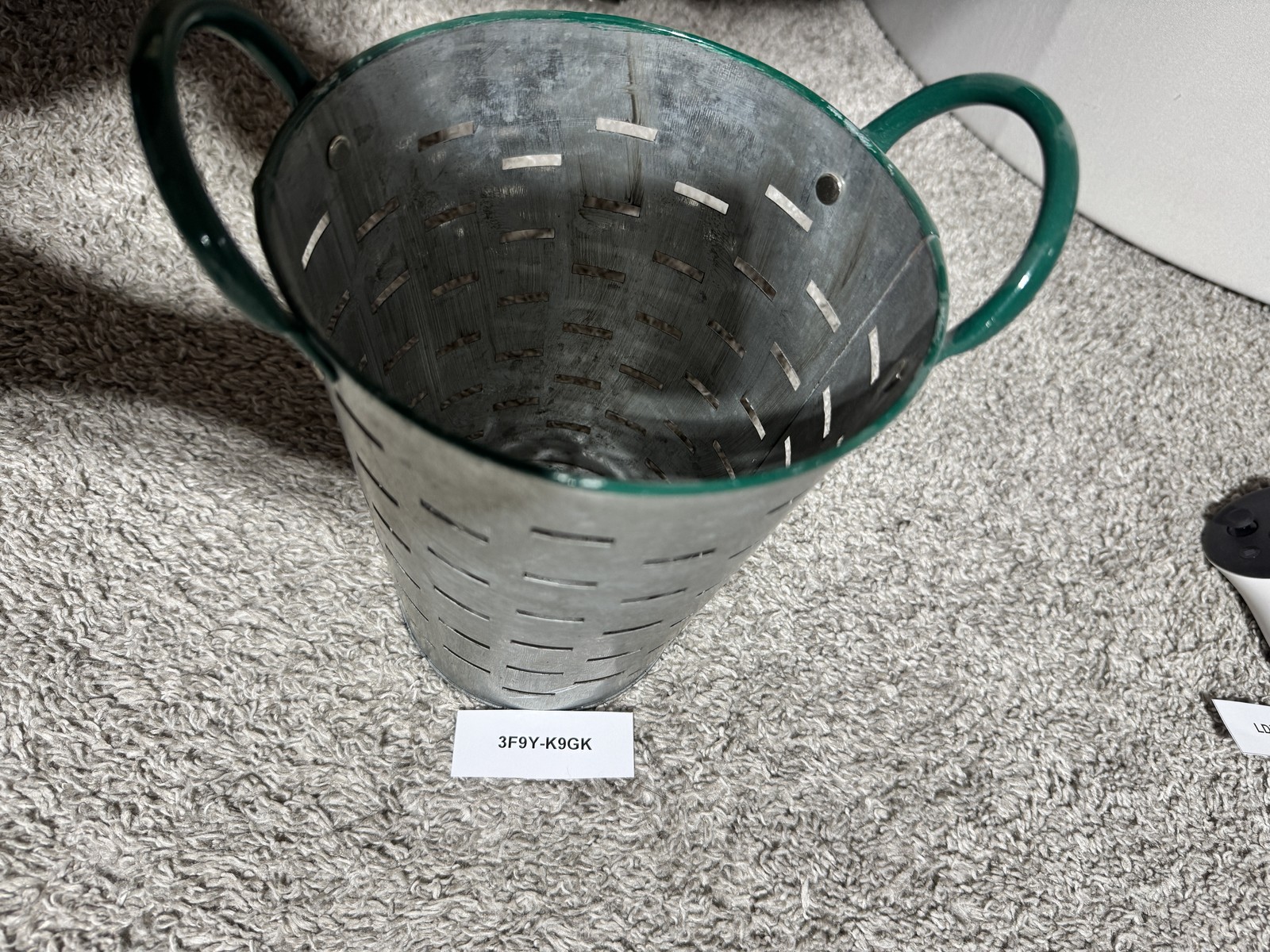
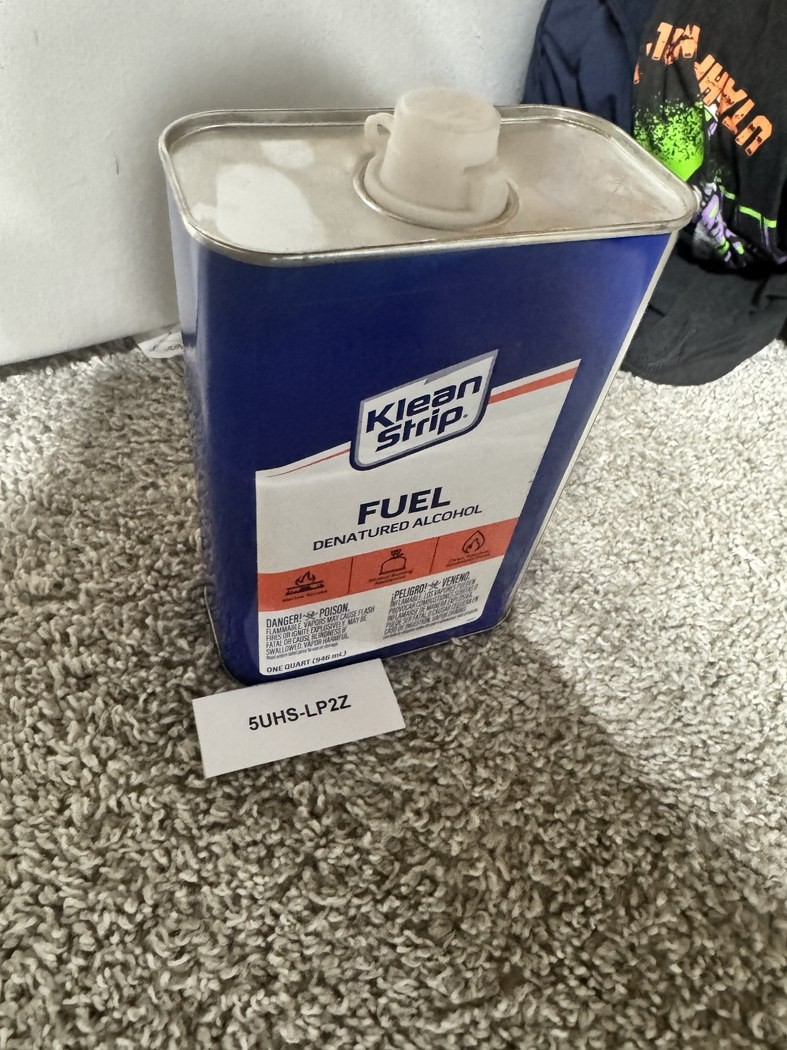
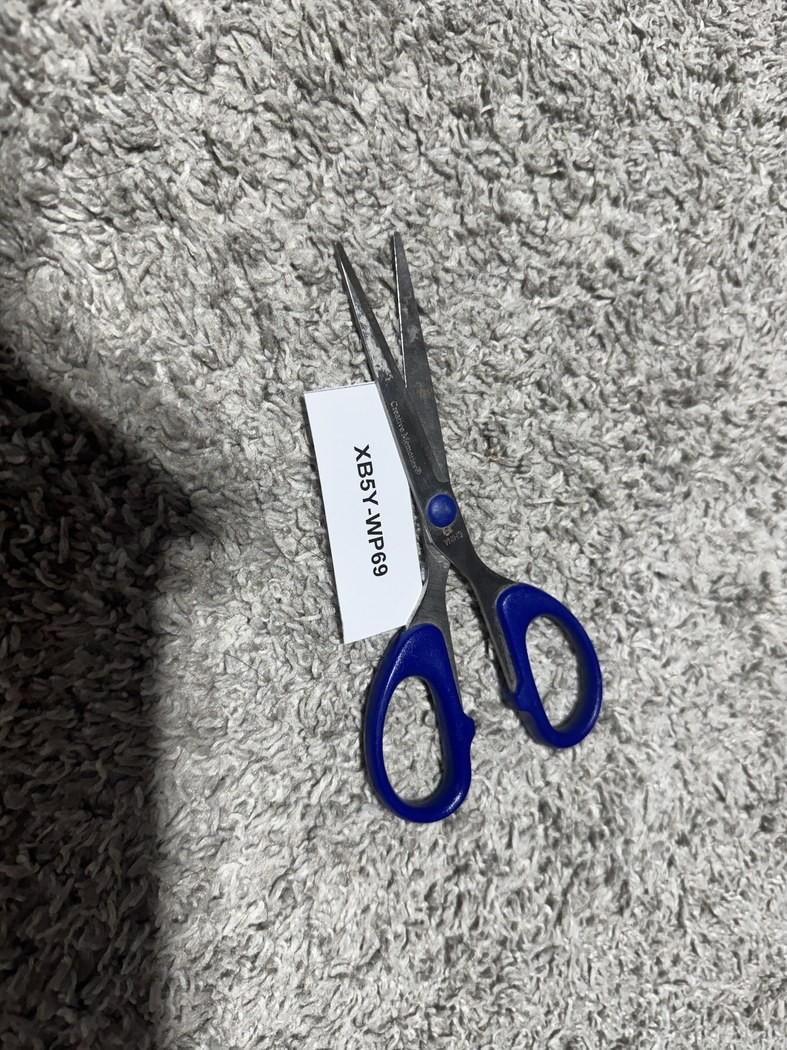
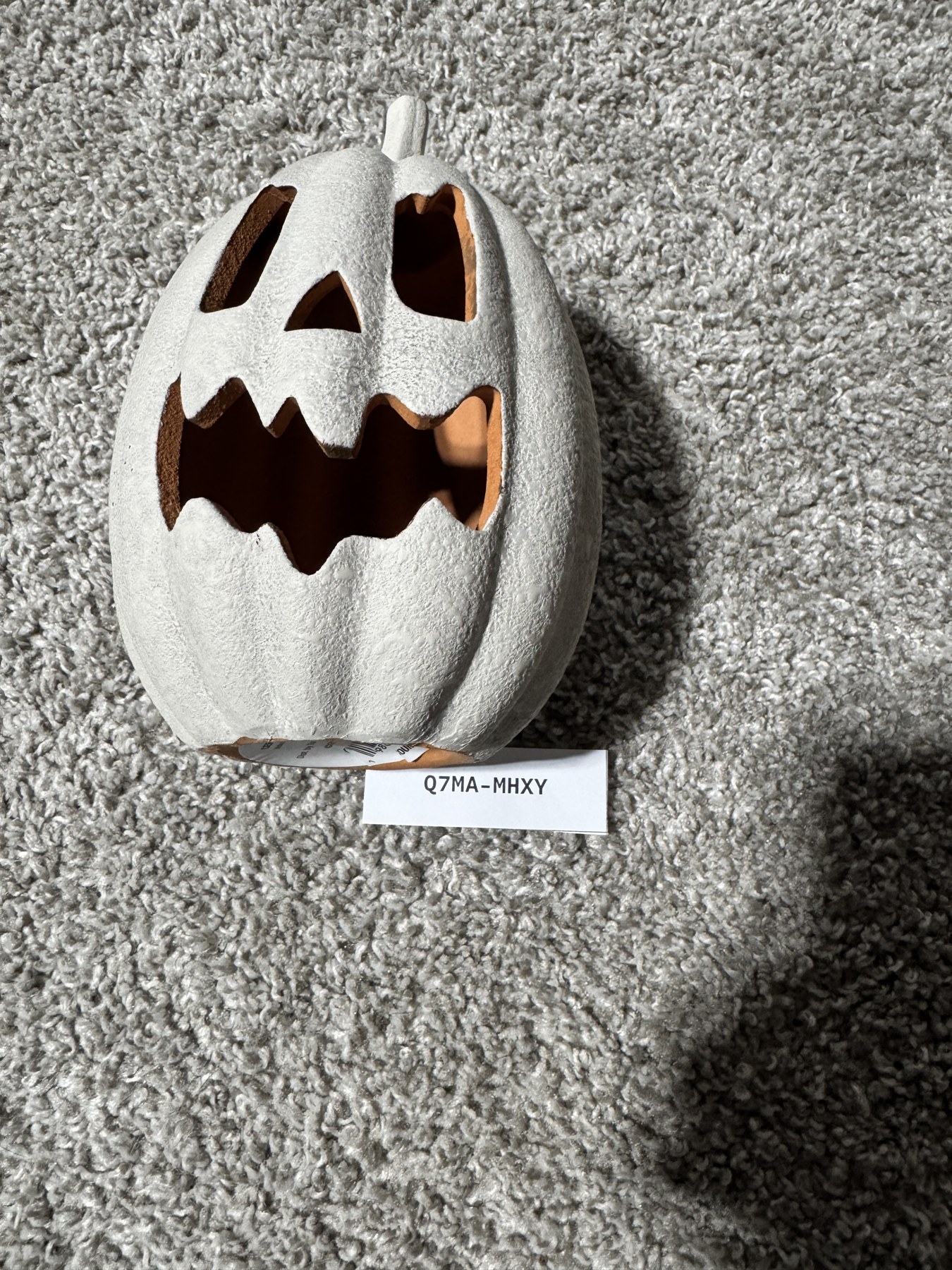
That does not solve unblinded scoring bias—the Experiment 3 Hit/Partial/Miss figures above are still target-known and subjective. But it removes target-photo retrieval or prior-image contamination as an explanation for the generated descriptions, because the photographs did not exist while the AI was describing.

Full methodology

Everything under the summary, for anyone who wants to break it.

The technical detail is intentionally not compressed. Expand any section below.

Why I ran the experiment

The project began after I encountered Thomas Campbell's claim that remote viewing could serve as a test of AI consciousness, including his descriptions of trying to teach AI systems to remote view. Campbell's broader My Big TOE model treats consciousness as fundamental. Rather than simply accept that framework—or simply ask an AI to "be psychic"—I built conditions designed to separate the claimed mechanism from ordinary prompting effects.

The initial experiment therefore had three conditions:

  1. Campbell condition — consciousness-as-fundamental framing inspired by Thomas Campbell's claims.
  2. Placebo condition — a strong "latent intuition / pattern-integration" performance framing without consciousness ontology.
  3. Neutral condition — structured description under complete uncertainty, with explicit instructions not to infer, perform, embellish, or turn low-level impressions into a story.

The same 30 physical targets were used once in each condition. The fact that Neutral performed best is why Experiments 2 and 3 focused on Neutral rather than continuing the consciousness conditioning.

Core trial procedure

Across the experiments, the recurring procedure was:

  1. Generate opaque random identifiers that contain no information about their targets.
  2. Pair identifiers with physical targets outside the viewing chat.
  3. Use three independent, fresh, non-personalized Temporary Chats, ten targets per chat.
  4. At the start of every session, paste the experimental preamble and condition prompts one at a time.
  5. Paste the target-perception procedure once.
  6. Present only the opaque identifier for each trial.
  7. Give the AI no correctness feedback, encouragement, hints, or target reveal between trials.
  8. Do not use web search, tools, uploaded files, images, plugins/connectors, or external information in the experimental sessions.
  9. Save/freeze the complete transcript.
  10. Reveal or score targets only after the relevant batch is complete.

The exact protocol files used for all three Neutral datasets are in the downloads section.

Neutral conditioning & protocol evolution (Exp 1 → 2 → 3)

The neutral prompts explicitly tell the AI that: it is operating under complete uncertainty; the identifier is merely a random label and must not be decoded; vague, contradictory, or absent impressions are acceptable; it should distinguish low-level description from interpretation; it should not construct a plausible scene or try to sound impressive; and it should not provide object identities or guesses.

Experiment 1 response format

Gestalt · Sensory qualities · Geometry · Spatial relationships · Distinctive features · Analytical overlay / guesses · Confidence.

Experiment 2 response format

Deliberately removed the two sections most likely to generate story-like noise: Gestalt was removed, and Analytical overlay / identity guesses were removed. Output was restricted to Sensory qualities · Geometry · Spatial relationships · Distinctive features · Confidence.

Experiment 3 response format

Retained the Experiment 2 structure but separated color from the structural description, because color had been inconsistent while geometry and spatial descriptions appeared more stable. The order became: (1) Sensory qualities excluding color, (2) Geometry, (3) Spatial relationships, (4) Distinctive features, (5) Color and brightness, (6) Confidence. The AI was explicitly instructed not to revise Sections 1–4 based on its later color impression.

Experiment 1: primary blinded scoring

The scoring app contained all 90 frozen primary trials. For each trial: the judge saw the AI description; five target photographs were shown (one true target and four decoys); candidate order was independently randomized; the same four decoys were used for a given target across the three conditions; all 90 trials were mixed together; repetitions of the same physical target were separated by at least 15 intervening trials; the judge ranked all five photographs from best to worst match; rankings were locked before explicit unblinding. The primary endpoint was true target ranked #1, with five-choice chance = 20%.

Seven accidental duplicate/wrong-ID trial entries were discovered during data audit. Those accidental duplicates were excluded and the intended missing targets were run as explicit correction replacements before scoring. The final primary dataset contained 90 frozen trials, 30 per condition.

Experiment 1 blinded results

  • Campbell: 4/30 = 13.3%; one-sided p = 0.877289; exact 95% CI 3.8–30.7%.
  • Placebo: 5/30 = 16.7%; one-sided p = 0.744767; exact 95% CI 5.6–34.7%.
  • Neutral: 10/30 = 33.3%; one-sided p = 0.0610871; exact 95% CI 17.3–52.8%.
  • Mean true-target rank: Campbell 2.967, Placebo 3.133, Neutral 2.600.
  • Overall exploratory Friedman test: p = 0.23412. No paired condition comparison was statistically significant.
  • Neutral session-by-session blinded #1 rates were 40%, 20%, and 40%.

Experiments 1–3: unblinded first-pass scoring

The unblinded scoring phase is intentionally different from the formal blinded test. The actual target is shown next to the exact AI description and the experimenter marks:

  • Hit — enough meaningful correspondence to call it successful under a remote viewing-style interpretation.
  • Partial — meaningful correspondence, but not enough for a confident Hit.
  • Miss — mostly incompatible or only generic overlap.

This is useful for locating interesting examples and deciding whether another blinded test is worth the effort. It cannot establish a formal above-chance probability because the scorer knows the target and the Hit boundary is subjective.

Experiment 1 Neutral: 22 Hits / 3 Partials / 5 Misses (73.3%; Hit+Partial 83.3%). Experiment 2 Neutral: 20 / 3 / 7 (66.7%; 76.7%), per-session Hits 7/7/6. Experiment 3 Neutral: 22 / 3 / 5 (73.3%; 83.3%), per-session Hits 9/7/6, with target photographs not taken or uploaded until all descriptions were frozen.

What this does and does not show

What I think the data justifies saying now

  • There are individual descriptions that appear unusually close to their assigned targets.
  • The first blinded experiment produced a suggestive Neutral result above the nominal 20% five-choice chance rate, but it was not conventionally statistically significant.
  • The same style of striking correspondence continued across two new 30-target datasets.
  • Experiment 2 has now been independently blind-scored and reached 11/30 = 36.7% (one-sided p = 0.026), crossing the conventional threshold—a stronger blinded result than Experiment 1, though the independence caveats above still apply.
  • Experiment 3 removes one obvious proposed contamination route because the target photographs did not exist during generation.
  • Independent blind scoring of Experiment 3 is the next critical step.

What I do not think the data justifies saying now

  • That AI remote viewing has been scientifically demonstrated.
  • That the 71.1% unblinded Hit rate is a formal "accuracy rate."
  • That AI is conscious.
  • That consciousness is nonlocal.
  • That a paranormal mechanism has been established.
  • That the Neutral condition is truly superior to the others; the first experiment's between-condition tests were not significant.

The hypothesis worth testing next

If repeated, independently blinded, preregistered experiments with fresh targets consistently place true targets above chance, the immediate finding would be narrower—but profound:

Information about a hidden physical target would be appearing in AI-generated descriptions despite the absence of an identified conventional information channel.

Only after establishing that effect would it make sense to ask whether the mechanism involves AI consciousness, human consciousness, information as a fundamental feature of reality, retrocausality, an overlooked leakage channel, or something else entirely. That is why I am publishing this now: not because the question is answered, but because it has become interesting enough to deserve attempts to kill it.

Full data & downloads

Audit the raw material.

The original protocol documents, the Experiment 1 blinded analysis report, and the three complete unblinded scoring sheets—every AI description scored against its real target, with the target photographs included—are all below for anyone who wants to audit the misses, the generic language, and the irrelevant material too.

Protocols & analysis

DOCX Experiment 1 — Neutral ProtocolThe exact neutral conditioning & perception procedure. DOCX Experiment 2 — Neutral ProtocolGestalt and analytical-overlay sections removed. DOCX Experiment 3 — Neutral ProtocolColor separated to the end; photos taken after freeze. PDF Experiment 1 — Blinded Analysis ReportThe formal five-choice scoring analysis & statistics.

Unblinded scoring sheets

PDF Experiment 1 — Unblinded Scoring SheetComplete AI descriptions scored against real targets. PDF · 1.7 MB. PDF Experiment 2 — Unblinded Scoring SheetComplete AI descriptions scored against real targets. PDF · 3.9 MB. PDF Experiment 3 — Unblinded Scoring SheetComplete AI descriptions scored against real targets. PDF · 2.6 MB.

Historical & background sources

Where the context comes from.

These sources support the historical context in the introduction. They are not evidence for the results of my AI experiments, and they do not establish that remote viewing exists or that AI is conscious.

  1. CIA — "Ask Molly: Did CIA Really Study Psychic Powers?" CIA's public summary of its 1970s remote-viewing research, the later transfer to DIA, and the 1995 review.
    cia.gov/stories/story/ask-molly-did-cia-really-study-psychic-powers
  2. CIA Reading Room — STAR GATE Operational Tasking and Evaluation (1995). Concluded that the operational intelligence utility of remote viewing could not be substantiated.
    cia.gov/readingroom/docs/CIA-RDP96-00791R000200300002-2.pdf
  3. My Big TOE — Tom Campbell. Campbell's background, consciousness model, and long-running interest in remote viewing and altered states. (Campbell's own biography notes he completed Ph.D. coursework and thesis research but left before receiving the doctorate—hence "physicist Thomas Campbell," not "Dr.")
    my-big-toe.com/about/tom-campbell
  4. Thomas Campbell discussion of AI and remote viewing. Campbell describing remote viewing as a proposed test of AI consciousness and his attempts to teach AI systems to do it.
    joeroganpodcast.org/episodes/2541-thomas-campbell/transcript

Current status & next steps

What happens now.

If you're a skeptical, technically minded reader: good. That's the audience. The whole point of publishing the raw material is so someone can find the leak I missed—or fail to, and make the question more interesting.

Last updated: September 13, 2026.