Technology Strategy · Architecture · Governance

Most IT leaders manage technology.
I build the system around it.

I've been in the MSP trenches since I was 19. What I've learned is that technology doesn't fail because of hardware. It fails because no one built the function that governs it.

Utah · Executech · Director of Technical Alignment
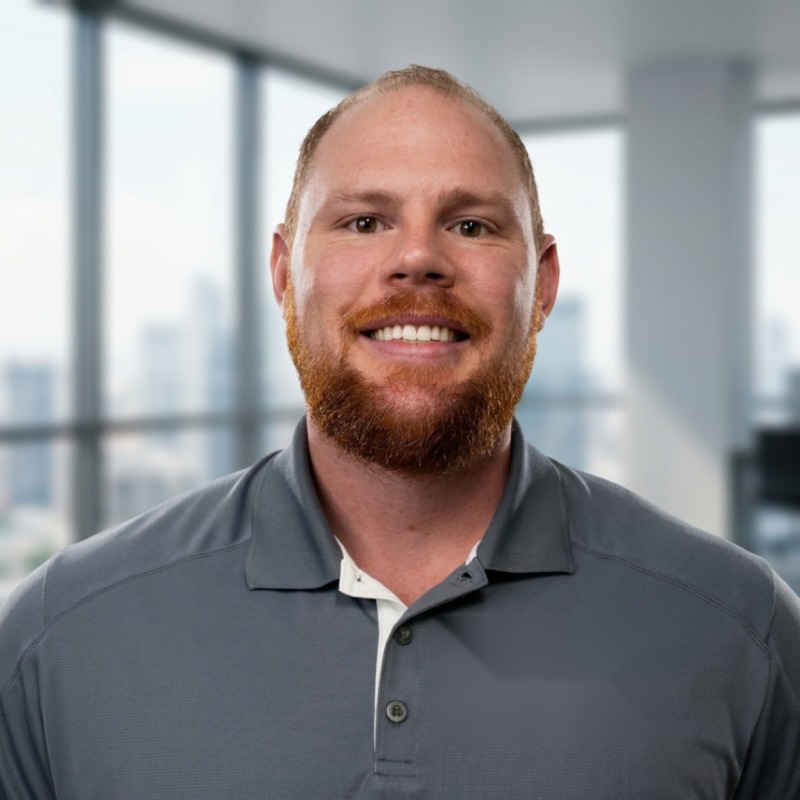
Dallas Pedersen
Watch · 90-sec intro
New · Free Tool

Try the prototype: generate a directional technology roadmap in about 15 minutes.

The Alignment Diagnostic asks 34 questions about how your business actually runs, then generates a deterministic technology roadmap: the initiatives worth scoping, in the order that matters. No login required. It's a prototype, so treat the output as directional.

34 questions · 12–15 min · Instant results

95
Clients supported
~6,600
Managed endpoints across the team I direct
~1,800
Managed endpoints in my personal book
40
Clients on 18-month roadmaps so far
15+
Years in the MSP / tech industry
$1M
In opportunities identified, first 45 days

Philosophy

This isn't IT support.
It's a discipline.

Most organizations treat technology as something to manage: a ticket queue, a vendor list, a line item in the budget. That's not alignment. That's triage.

What I do is different. I build the systems that make technology intentional: the processes, the people, the decision frameworks, the feedback loops. The goal isn't to put out fires faster. The goal is to build an organization that's harder to set on fire.

This is what I call technical alignment: not a service you outsource, but a function you build. And like any function worth building, it requires systems thinking, not just technical knowledge.

The same mental model that makes a vCIO program work is what made a realty business and a marketing agency run. The industry changes. The thinking doesn't.

"Technology doesn't fail because of hardware. It fails because no one built the system around it."

"I don't optimize for high-ticket projects. I optimize for client success and what they actually need."


The Framework

What "governing technology" actually looks like.

Technical alignment isn't a service you buy off a shelf. It's a function that runs on a repeatable process, the same one whether the business is an MSP, a realty office, or a marketing agency. Here's the system underneath the work, and what it produces.

01

Assess

A full technical assessment against industry standards, paired with structured interviews of the people who run the business, POCs and executives, for real context.

02

Identify

Three to ten initiatives per client, each tied to a specific technical need, a business goal, and a risk worth eliminating. Together they form an 18-month foundation.

03

Scope

Every initiative gets the same rigorous write-up: current state, desired state, the step-by-step path, risks and dependencies, an executive summary, a SoW, and a full bill of materials.

04

Sequence

A 60-point business-context index (goals, workflows, bottlenecks, budgeting) shapes the phasing around how the business actually runs, with a line of sight to years 2 to 5.

05

Govern

Reviewed on cadence and adjusted before things break. Documented deeply enough that a client can pause to budget and resume months later without losing a step.

Availability
Security
Automation
Client value
Support burden

Every initiative is documented end to end, so the roadmap holds its value whether a client acts on it this quarter or next year. The right recommendation isn't always the expensive one, and when it's a no-cost fix, that's exactly what goes on the plan.


Technical Case Files

The work behind the framework.

Strategy is only as good as what it ships. These are sanitized engagements I scoped and drove end to end, with client names, hostnames, and addresses removed and the technical substance left intact. They span identity, cloud migration, legacy-system risk, greenfield network design, and OT/ICS security.

CASE 01

On-prem to cloud transformation for a manufacturer

Microsoft Entra ID Intune Azure OneLogin → Entra SharePoint / OneDrive Server elimination
Environment

A manufacturing company running five Windows servers and two NAS units on-prem, OneLogin for SSO alongside on-prem Active Directory, and line-of-business CAD, labeling, and accounting apps tied to local infrastructure. One aging server existed only to feed a legacy MS-DOS CNC machine over SMB1 and NTLMv1, protocols that should have been retired a decade earlier.

The problem

An aging on-prem footprint with security liabilities baked in, identity split between OneLogin and on-prem AD, and every cloud-first ambition blocked behind hardware nearing end of life. The reflex answer was the expensive one: replace the servers with newer servers and reset the clock on the same problems.

What I did

Scoped a transition to the Microsoft 365 cloud stack instead of a hardware refresh. Migrated identity off OneLogin into Entra ID and consolidated SSO; moved Active Directory to Entra and brought workstations under Entra join and Intune with device-based Conditional Access; moved the CAD and labeling software to the vendors' own cloud licensing; relocated working file shares to SharePoint and OneDrive and cold NAS archives to Azure blob storage; and isolated the unavoidable legacy CNC share on a segregated VM so its ancient protocol requirements couldn't touch anything else. The aim throughout was elimination, not replacement: retire each liability rather than rehost it.

Outcome

The migration came in roughly cost-neutral against simply buying a new host and storage, but bought far more availability, security, and scalability. The payoff proved itself when the client opened a production facility overseas (see Case 03): because the foundation was now cloud-based, the new site needed only a connectivity layer, so no one had to fly out or rebuild a server stack on site.

CASE 02

Isolating a legacy ERP that couldn't be retired

Network segmentation Windows Server 2008 R2 SQL Server Active Directory BDR Risk reduction
Environment

A construction company running a Windows Server 2008 R2 VM that hosted SQL databases for an archival ERP/accounting platform and an in-house-developed job-tracking system. The newest data was approaching three years old, but open and unpaid jobs still had to be referenced regularly, so the system couldn't simply be switched off.

The problem

An unsupported, end-of-life server can't safely sit on a production network, but it also couldn't be decommissioned. I scoped a clean upgrade of the OS and SQL instances on new hardware, but it was cost-prohibitive: the ERP vendor required roughly nine years of back-dated support licensing to move to a supported release.

What I did

Chose containment over replacement and solved a licensing-and-hardware problem with networking. I segregated the VM onto its own isolated segment with tightly restricted access, permitted only to authenticate against Active Directory and back up to the BDR appliance. Controlled remote access runs through a separately segmented Windows 7 jump VM that can communicate only with AD and the 2008 R2 server, and nothing else.

Outcome

Business-critical reference data and access preserved at a fraction of the upgrade cost, with the unsupported system removed as a lateral-movement risk to the rest of the environment. The right answer wasn't the expensive one.

CASE 03

Greenfield secure network for an overseas production site

Sophos XGS VLAN segmentation UniFi Device-based Conditional Access Microsoft 365 Lab staging
Environment

The overseas expansion of the manufacturer from Case 01: a brand-new international production location of roughly 10 users and 30 devices, with no existing infrastructure beyond cabling. Because Case 01 had already moved the business onto Microsoft cloud services, the new site needed a secure local network and direct cloud access rather than a tunnel back to headquarters.

The problem

Stand up a secure, supportable, centrally managed network for a remote international site with no local IT, while the ISP and static IP stayed unknown until the building lease was signed and all physical install would be done by non-technical staff on site.

What I did

Designed the full architecture and bill of materials around a cloud-first access model. Early scoping assumed a site-to-site VPN back to headquarters, but as the cloud migration completed that requirement fell away: users reach company resources directly through Microsoft 365, with access gated by device-based Conditional Access so only managed, compliant devices connect. That removed an entire international VPN boundary from the attack surface. On site, a Sophos XGS firewall provides the security edge, the LAN is segmented into three VLANs (wired, internal WiFi, and isolated guest) with explicit inter-VLAN policies, UniFi switching and access points are centrally managed, and a UPS is sized for graceful shutdown. The whole stack was staged, configured, and lab-tested in the US before shipping, with an installation runbook and diagnostics checklist written for non-technical hands.

Outcome

A remote international site that came online securely with minimal on-site technical intervention and a smaller attack surface than a traditional VPN-connected branch, plus a documented, repeatable model for the next site the business opens.

CASE 04

Identity & Intune standardization for a behavioral health clinic

Microsoft Entra ID Azure AD Domain Services Intune Conditional Access Identity remediation 373 endpoints
Environment

A behavioral health clinic running 373 managed workstations on a split identity model: 158 were Entra ID joined but authenticated through Azure AD Domain Services, while 215 authenticated natively through Entra ID. A finance server and file shares sat behind the same AAD DS dependency, with DNS configurations drifting across devices to accommodate it.

The problem

The mixed model produced two parallel authentication paths: different sign-in behaviors per device, troubleshooting that required knowing both models, and Conditional Access and device compliance that couldn't be enforced consistently. The AAD DS dependency was also the blocker holding back every cloud-first security initiative behind it.

What I did

Scoped the standardization end to end: audit the authentication state of all 373 workstations, validate Intune enrollment and policy readiness, and test Conditional Access in report-only mode before enforcing. Then a phased migration, a 20 to 30 device pilot validated against critical resources followed by staged waves with rollback triggers, moving every endpoint to native Entra ID authentication, unifying Conditional Access and compliance baselines in Intune, decommissioning AAD DS for workstation auth, and standardizing DNS back to Entra-aligned patterns. Profile migrations were sequenced carefully to avoid corruption, with support enablement and runbooks delivered alongside.

Outcome

A single, standardized authentication path across all 373 endpoints, AAD DS retired as a dependency, consistent security policy enforcement, and a measurably simpler support and troubleshooting workflow, with the legacy blocker to further cloud and security work removed.

CASE 05

Securing the IT/OT boundary for critical infrastructure

OT / ICS security SCADA Building automation (BMS) Network segmentation High availability Vendor governance
Environment

A municipal client running a SCADA system for critical infrastructure, alongside a multi-building HVAC and building-automation (BMS) environment monitoring systems across several facilities. The control systems themselves, the PLCs, controllers, and application logic, are owned and operated by specialist OT vendors, as is standard in this space.

The problem

Operational technology lives or dies at the boundary between the corporate IT network and the operational network. That boundary, the segmentation, the remote access, and the availability, is where these environments are actually attacked or fail, and it is the layer the system vendors don't own. The work is to secure and sustain that boundary without getting in the way of the vendors who run the systems inside it. Get it wrong in either direction and you either leave critical infrastructure exposed or you stop the people who keep it running from doing their job.

What I own

The network architecture and security boundary around the vendor-managed OT systems. I design and maintain the segmentation that isolates the SCADA and BMS networks from the corporate environment, define and govern the controlled remote-access model the vendors use to reach their systems, and build the high availability the monitoring and control require so nothing goes dark. I set the demarcation of responsibility, what the vendor controls inside the system versus what I govern around it, and I hold the security posture at that line. The control logic itself stays with the OT specialists, by design.

Outcome

Critical municipal infrastructure and multi-building systems that stay monitored and available, with the highest-risk layer, the IT/OT boundary and remote access, segmented, governed, and owned rather than left flat or over-trusted to a vendor. The right model for OT isn't doing the vendor's job; it's owning the part the vendor can't.


The Work

Track record over pitch decks.

01

Director of Technical Alignment, Executech

2025-Present · Utah Region

Built the technical alignment service area from the ground up: a TAM + vCIO hybrid function that didn't exist before I started. Defined the methodology, built the team, established the processes. In the first 45 days, a team of 3.5 identified $1M in foundational project opportunities across the client base: work scoped and ready for clients to budget and approve. Today: 40 clients on 18-month technical roadmaps across an initial cohort, with the rest of the book being onboarded behind them.

Department Built from Zero
02

Founder & Owner, MSP (Independent)

2020-2025 · Five Years

Started, built, and ran my own managed service provider for five years. Wore every hat: technical, operational, financial. Closed it not because it failed, but because a better opportunity came along. That distinction matters to me.

Founded & Operated
03

Multi-Industry Operations: Social Marketing, Realty, Home Services, RV Rental, Auto Care

Parallel Ventures

Five different industries with nothing in common except the same operator running them. A social media marketing agency (content creation, influencer coordination, paid ads, lead generation, product catalogs, giveaways, and event advertising) that I sold going into 2025. Residential real estate. Housekeeping. An RV rental fleet of Class B and Class C motorhomes. An engine carbon-cleaning service. None required IT expertise. All required systems thinking: how do you build a process that works without you being in every decision? Turns out the answer is the same regardless of the industry.

Systems Transfer
04

15+ Years in the MSP / Tech Industry

2011-Present

Started at 19. Grew up in the MSP world before anyone called it an MSP. Have seen this industry from nearly every angle: technician, engineer, owner, department head. The perspective that comes from doing all of it, not just one piece, is what informs how I think about technical alignment as a discipline.

Ground Up

My Approach,
in writing.

View all →

Building in Public

Why I built the Alignment Diagnostic

A PTO weekend, a video about learning Claude, and a chain of small decisions that ended in a working prototype: 34 plain-language questions in, an IT roadmap preview out. What it is, and everything it isn't.

June 2026

vCIO / Technical Alignment

Anatomy of a roadmap initiative

The roadmap is the easy part. The value lives inside each initiative write-up: business purpose, current state, dependencies, risks, unknowns, scope of work, assumptions, bill of materials. One of mine, taken apart and rebuilt into an 18-month plan.

2026

Systems Thinking

Scoping the execution: the design work nobody sees

Deciding what to do is strategy. Deciding how is engineering: architecture selection, sizing, compatibility and dependency mapping, the bill of materials. The design-desk work my function absorbs, shown through two real builds.

2026

Systems Thinking

Too deep is not an argument

I built an assessment with 110 questions in it. The only complaint was that it takes too long. That's a scheduling problem, not a reason to skip the understanding, and you can't make good long-term decisions for a business you don't understand.

2026

vCIO / Technical Alignment

Stop replacing servers. Start eliminating them.

An engineer sees a server at end of life and reaches for the answer they've been rewarded for their whole career: replace it. But a newer server hosting the same problem doesn't remove a single support ticket. It just resets the clock on the same liability.

2026

vCIO / Technical Alignment

The best roadmap item I scoped this quarter cost the client $0

Most vCIOs are measured by the size of the projects they put in front of a client. By that scoreboard, one of the best things I scoped recently was a failure: it cost nothing. That gap is the whole problem with how the role usually works.

2026

Systems Thinking

The difference between managing technology and governing it

Over the years I ran three different teams of eight to twelve engineers. We hit our KPIs. Then the organization shifted and I watched it all fall apart. Not because the people got worse. Because decisions were being made on vibes instead of a framework.

2026

Leadership

Hire people better than you, then actually let them be better

Everyone says hire people better than you. The part nobody unpacks is what "better" actually means, because the advice stops making sense the moment you expect it to mean better across the board.

2026

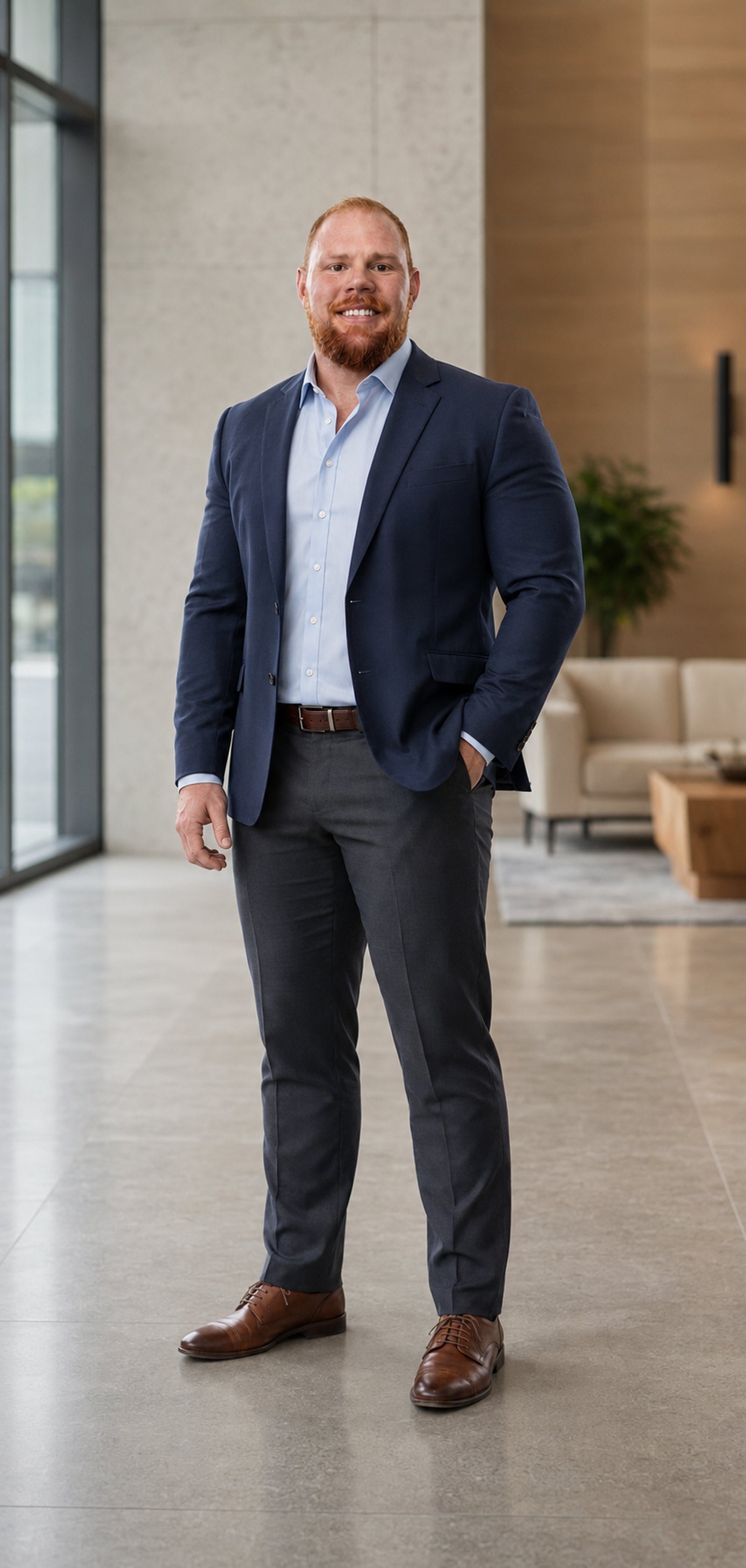
Dallas Pedersen

Dallas Pedersen is the Director of Technical Alignment at Executech, where he built Utah's Technical Alignment and vCIO function from the ground up. He's been in the MSP and tech industry since 2011, has owned and operated businesses across IT, social media marketing, real estate, home services, RV rental, and automotive care, and thinks about every one of them the same way: as a system.

Contact

Let's talk systems.

Whether you're thinking about technical alignment, building a vCIO practice, or just want to compare notes on what's actually working. My inbox is low-pressure. I'm currently employed and not shopping myself around, but good conversations are always worth having.